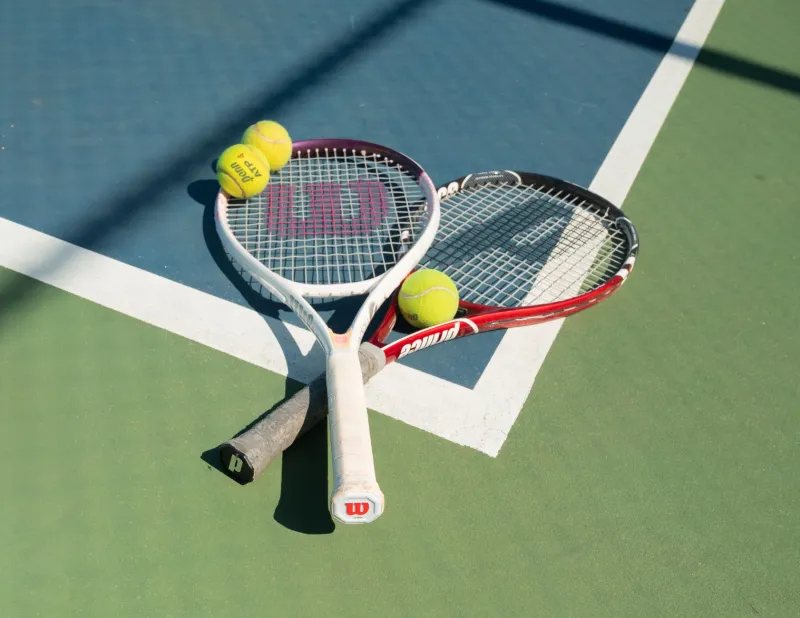
The Draw Is Not a Verdict: Your First Coylton Club Championships, Explained

Every year, a sheet of paper appears in the clubhouse and a quiet ripple goes round Coylton Tennis. The club championships are open for entries, and half the membership thinks the same thing: I’m not good enough for that. If that’s you, this is your gentle nudge. The championships are not an exam. They are a week of tennis, a few friendly nerves and a very good excuse to spend more time at the courts.
What the draw actually is
At club level, a draw is simply the map of who plays whom. Once entries close, the organisers sort names into a main draw, sometimes a plate or consolation event, and then publish the schedule. You do not need to understand bracket theory to take part. You need to know your first match, your court and your time. Check the noticeboard, the club email and any group chat the committee uses. If your name is spelled oddly or your availability has changed, say so early. That is not fussing; it is helping the tournament run smoothly.
You may see byes. A bye is not a mysterious reward. It happens when the numbers do not divide neatly, and someone moves straight to the next round. You may also see matches described as best of three sets, an eight-game pro set or a short set with a tie-break. Formats vary by event and entry numbers. Read the small print once, then ask if anything is unclear. Nobody at Coylton minds a first-timer checking.
Seeding, without the mystique
Seeding sounds official. At club level it usually means the organisers have placed a handful of stronger or more experienced players at separate points in the draw so they do not meet in round one. Seeds are chosen from recent results, ladder form, past championships and a bit of committee knowledge. It is a fairness tool, not a ranking of your worth as a person or a member.
If you are unseeded, you are in the majority. It does not mean you cannot win a match or two. It means the draw has not made assumptions about you. Club tennis is full of players who have improved quietly through social sessions, coaching and winter league, and whose names do not yet shout from the ladder. The championships are where some of those names get noticed.
Getting ready for a week of matches
The biggest adjustment for first-timers is not the standard of tennis. It is the rhythm. You might play once, or you might find yourself back on court three times in five days. Plan accordingly. Keep the week lighter than usual if you can. Do not schedule a hard training session the night before your first match just to prove a point.
Pack like someone who expects to be out for a while: water, a snack, a spare grip, a towel, layers for the evening, and a cap if the sun decides to behave. Bring both rackets if you have them. Arrive early enough to warm up without rushing, and check the court allocation before you start hitting. A proper warm-up is not a luxury; it is how you avoid spending the first three games wondering where your forehand went.
Off court, use the clubhouse. Watch a match. Ask how someone’s serve is feeling. Offer to umpire if a match needs it. The championships are one of the few weeks when the whole club is in the same place at the same time, and that is part of the point.
The first-round exit is not the end
Here is the thing nobody says loudly enough: going out in the first round is a normal club tennis experience. It happens to most players at some point, including players who have been members for years. It does not mean you should not have entered. It means you had a match, you learned something and you were part of the week.
Many club championships include a plate or consolation draw, so ask whether one is running. If it is, enter it. If it is not, stay for a coffee, watch the next round and make a note of what you want to work on. The player who loses on Tuesday and comes back to social tennis on Thursday with one small improvement is exactly the kind of member club championships are for.
Why it is worth putting your name down
Entering gives you a goal that social tennis does not always provide. You will practise with a bit more purpose. You will notice your serving patterns. You will find out how you cope when a match is close. You will also meet people from other corners of the club — the Tuesday morning hitters, the junior parents, the winter league regulars — and that makes the whole place feel smaller in the best way.
The Coylton club championships are not reserved for the top team. They are a club event, and clubs need all sorts of players to make a draw. If you can keep a score, get to the court on time and be decent company afterwards, you are qualified. Put your name down. Check the draw. Turn up. The rest is tennis.