Kettle First, Scorecard Second: Why the Coylton Clubhouse Still Wins
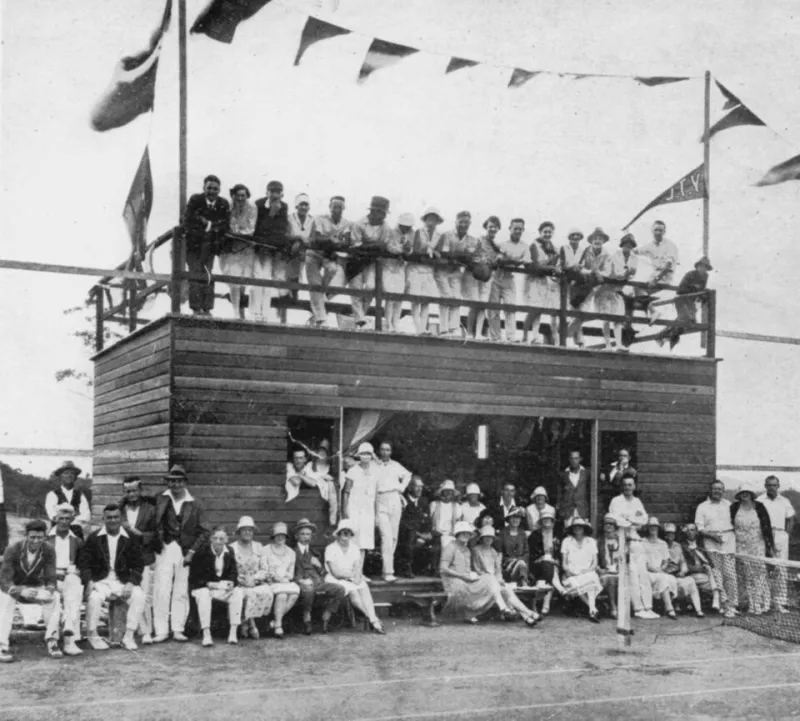
Photo: State Library of Queensland, Australia, No restrictions, via Wikimedia Commons
I have a theory that you can learn more about a tennis club from its kettle than from its trophy cabinet. A trophy cabinet tells you who won. A kettle tells you whether people stick around afterwards. At Coylton Tennis, the clubhouse debrief is not an afterthought. It is part of the match.
This is not a plea for endless post-mortems or forced small talk. Nobody needs a tactical lecture while they are still untying their shoes. But the twenty minutes after the final handshake do something important. They turn a result into a conversation, and a conversation into a club.
The match ends before the tea does
There is a particular moment after a close league match when everyone is still a bit wired. Rackets are being zipped away, somebody is looking for a lost water bottle, and the score is being checked one last time. That is the moment the clubhouse earns its keep.
A mug of tea does not change the score. It changes the mood. It gives players somewhere to land after the concentration of a match. It gives the visiting team a reason to sit down rather than dash off. It gives the home pair a chance to say well played and mean it.
At Coylton, we are lucky that the clubhouse is close enough to the courts to make that easy. You do not need a formal spread. A tray of biscuits, a clean tea towel and enough mugs to go round will do more for club life than a fancy match programme.
Talking about a loss without turning it into a post-mortem
Losing is part of league tennis, and it is usually less interesting than we think. The temptation after a defeat is to relive every point in forensic detail. That can be useful, but only if both people want to do it. Otherwise it turns into a slow-motion replay of the same three errors.
A better approach is to keep it short and specific. What worked? What would you try next time? Was there one pattern that kept causing trouble? Then stop. Let the tea do its work.
It also helps to separate the result from the performance. You can play well and lose. You can play poorly and win. If the only conversation afterwards is about the score, players start to feel like the score is the only thing that matters. At a club like Coylton, that would be a shame. The league table is a useful thing. It is not the whole thing.
Feedback for a doubles partner that people can actually use
Doubles partnerships live or die on communication, and the clubhouse is where a lot of that communication happens. The trick is to give feedback that is useful rather than simply true. Saying ‘we lost the middle’ is true. Saying ‘next time, I’ll cover the middle earlier if you take the line’ is useful.
Try to phrase things as choices rather than criticisms. ‘Do you want me to poach more, or would you rather I hold?’ is a question a partner can answer. ‘You left everything down the middle’ is a sentence they will remember for a month, and not fondly.
And if you are the one receiving feedback, a simple ‘fair enough, let’s try that’ goes a long way. You do not have to agree with every point. You just have to stay in the conversation.
Welcoming the visiting team
There is a reason visiting teams remember certain clubs. It is rarely the changing rooms. It is usually the welcome. A hello at the door, a clear explanation of where to put bags and a working kettle can make a long away trip feel worth it.
At Coylton, we should be proud of that reputation. The visiting team is not an inconvenience. They are the reason there is a match. A small act of hospitality, like offering first pick of the biscuits or checking whether anyone needs a hot drink before the warm-up, sets the tone for the whole afternoon.
It also helps after a close match. When the handshakes are done, a few minutes of chat can take the edge off a tense result. Players from other clubs often say that the friendliest fixtures are the ones they look forward to. That is a competitive advantage, just not the one you see on the scoreboard.
Making the kettle feel like part of the kit
None of this needs a committee. It needs a few people who are willing to put the kettle on and a club culture that values it. If you are hosting a home match, check the basics before the visitors arrive. Milk in the fridge. Tea bags in the tin. A clean cloth. Maybe a tin of something nice.
If you are playing away, offer to help with the washing up. If you are watching, make room on the bench. These are small things, but they are the things that make a club feel like a club rather than a booking system.
So yes, I am arguing for the post-match tea. Not because the match does not matter. It does. But the tea is where the match gets put into perspective. It is where a doubles partnership learns to talk properly. It is where a visiting team decides they would be happy to come back. And it is where a loss stops being a big deal and becomes a story you can laugh about by the time the biscuits are gone.
At Coylton Tennis, the kettle is not a substitute for the racket. It is the thing that makes the racket worth picking up again next week.