Your Quietest Hitting Partner: Solo Sessions That Sharpen Coylton Tennis
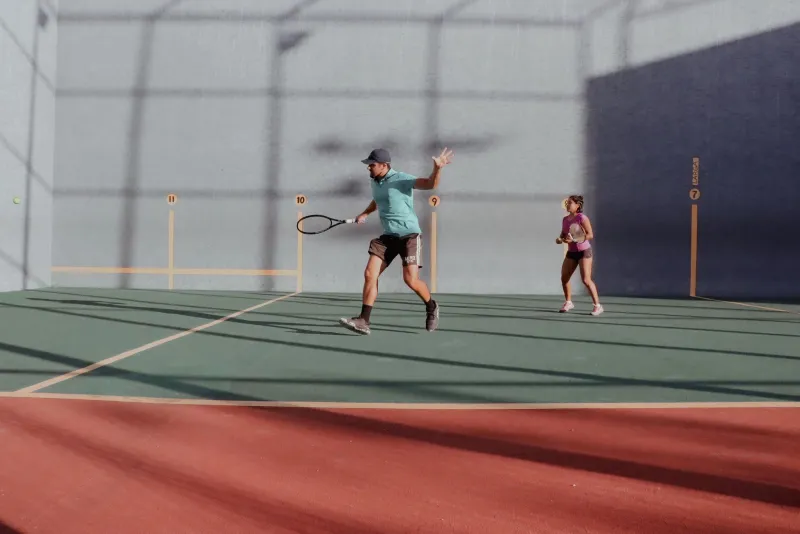
Ask most players what is holding their game back and you will hear a familiar list: not enough matches, not enough time, not enough partners who fancy a hit on a damp Tuesday evening. The practice wall does not solve the diary, but it does remove one excuse. It never cancels, never minds if you are ten minutes late, and never judges a shank into the hedge. Used with a bit of purpose, a solo session can be sharper than a loose social knock.
As we move through the back end of 2026, the courts around Coylton will be quieter on plenty of evenings. That is not a problem to solve with a bigger diary. It is a chance to build a small, repeatable practice habit. You do not need a basket of forty balls or a coaching qualification. One racket, a handful of balls and a clear idea of what you are working on will do nicely.
Start with a purpose, not a bucket of balls
Before you zip up the racket bag, pick one theme. Footwork, consistency or serve rhythm. Trying to fix everything in twenty minutes usually means fixing nothing. A simple plan is better: five minutes of movement, ten minutes on the main drill, five minutes of rhythm or cooldown. That structure keeps solo practice from drifting into aimless hitting.
Warm up properly, too. A few minutes of easy side-steps, gentle trunk rotations and short shadow swings are worth more than launching the first ball at the wall like it has personally offended you.
The 20-minute footwork loop
Footwork is the easiest thing to ignore when nobody is feeding you balls, and the easiest thing to train when you have a wall. Stand a sensible distance back and hit gentle forehands into the wall, but treat every shot as a movement cue. Split-step as your partner-wall sends the ball back. Move to the ball rather than reaching for it. Recover to a neutral position before the next shot.
A useful loop looks like this: ten forehands with a split-step, ten backhands, then twenty alternating shots where you focus on small adjustment steps. Keep the pace comfortable. The goal is not to smash the wall into submission; it is to arrive balanced. If you find yourself lunging, shorten the rally and reset.
You can do the same routine on an empty court with drop-feeds. Hit a ball down to yourself, move around it, play a controlled forehand, then recover. It feels a little odd at first, but it mirrors the stop-start rhythm of a real point far better than standing still and swinging.
Consistency: make the wall boring
The wall is a brilliant consistency coach because it gives you exactly what you put in. If you spray the ball, the rally dies. If you hit with control, it keeps coming back. Set a simple target: twenty consecutive forehands without losing control, then twenty backhands. If that is too easy, alternate forehand and backhand for twenty shots. If that is still too easy, add a rule that every ball must land above a certain height on the wall.
Boring is good here. Boring means you are repeating a shape, not just exercising your arm. Count out loud if it helps. Notice where your feet are when you make contact. Notice whether your racket finishes the same way on shot five as it did on shot fifteen. That kind of attention is difficult to fake in a social hit, where the next ball arrives whether you were ready or not.
For an empty court, use the service boxes as targets. Drop-feed from the baseline and aim cross-court, then down the line. Ten balls each, tracking how many land in the correct box. It is a simple game, but it gives solitary practice a scoreline, and most tennis players cannot resist a scoreline.
Serve rhythm without a serving partner
The serve is the loneliest shot in tennis, which makes it perfect for solo work. You do not need a partner to groove a rhythm. Start with the toss. Ten tosses, letting the ball land just in front of your lead foot, without hitting. Then ten serves at half pace, focusing on the same toss and a smooth swing. The wall can help here too: serve gently into it from a few metres away and catch the rebound, or simply use the court and aim at a target in the service box.
A good rhythm drill is to count the serve. Say 'up' as the ball leaves your hand and 'through' as you make contact. Keep the count steady. If the count stutters, the serve usually stutters with it. Twenty serves with a clear rhythm is more valuable than fifty serves hit at full power with no plan.
Empty courts, same principles
If the wall is busy or the weather has turned, an empty court works just as well. Book it through the usual club arrangements, keep the session short and leave the court as you found it. A few drop-feed rallies, some target practice and a handful of serves will fill twenty minutes without turning into a marathon. In winter, remember the layers, the darker evenings and the fact that cold balls behave differently. Shorten the session if your hands are numb; there is no prize for stubbornness.
Turning solo work into Saturday tennis
The real test comes when you play with someone else. That is when the solo session pays off. If you have been working on split-steps, you will notice yourself arriving earlier to the ball. If you have been counting consistency rallies, you will find it easier to settle into a match. If you have been serving with rhythm, your toss will be less of a lottery.
Keep a tiny note on your phone after each session: one thing that worked, one thing to watch. Next time you head to the courts, pick one of those notes and build another twenty minutes around it. The wall will still be there, patient as ever. And the next time a partner cancels, you will know exactly what to do with the evening.