Seven Green Lights: When Social Tennis Turns Into Coylton League Ready
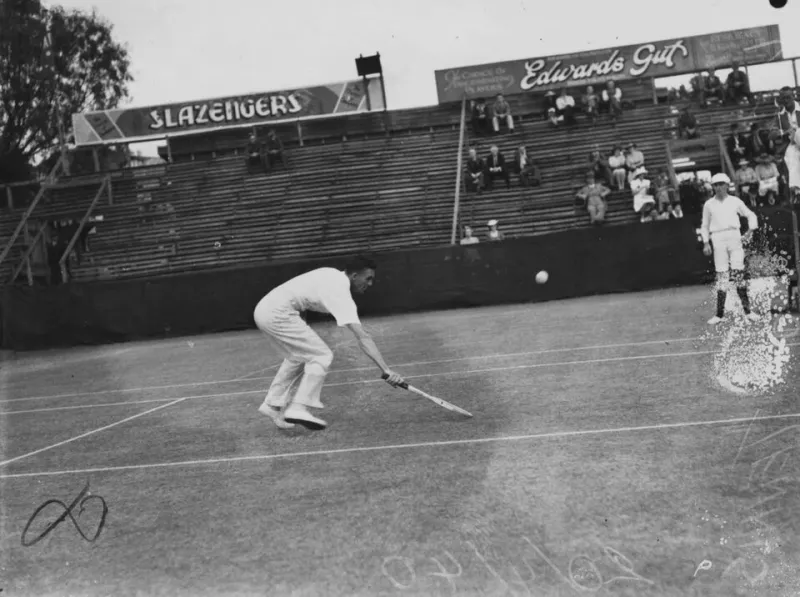
Photo: Contributor(s): Queensland Newspapers Pty. Ltd., Public domain, via Wikimedia Commons
League tennis has a reputation for being serious. At Coylton Tennis, it is also just another way to spend a Saturday with friendly faces and a decent flask of tea nearby. The step from social sets to league play is smaller than it looks. You do not need to be the finished article. You need a handful of habits, a little confidence and the willingness to learn on the job.
If you have been hovering around the club nights wondering whether you are ready, here are seven green lights to look for. None of them require a new racket or a sudden transformation into a serving machine.
1. You can keep score without a committee meeting
Social tennis can be forgiving about score. League tennis is a bit less so. If you can call the score clearly, remember the game count and sort out a tie-break without three people checking their watches, you are further along than you think. You do not need to be flawless. You just need to be comfortable enough that the score is not the main event.
A simple fix is to play a few practice sets where one pair is responsible for calling every score out loud. It feels fussy for about five minutes, then it becomes second nature.
2. Your second serve has a plan
It does not need to be a weapon. It just needs a purpose. A slower serve that lands deep, or a spinny one that gives you time to move in, is worth more than a double fault and a quiet apology. If you know roughly where your second serve is going, league tennis becomes a lot less stressful.
3. You have a basic language for doubles
You do not need hand signals, code words and a laminated tactics sheet. You need a few clear phrases: mine, yours, switch, leave it, good ball. The best doubles partnerships at Coylton are not the ones with the most complicated plans. They are the ones who talk early and do not go silent at 30-30.
4. Your warm-up has become a routine
The first ten minutes of a league match are not the time to discover that your shoulder needs another five. A short, repeatable warm-up is a green light. A few gentle jogging steps, some arm circles, a handful of easy groundstrokes and a few serves will do it. Keep it simple enough that you will actually repeat it when it is cold and the courts are damp.
5. Your kit bag is boring in the best way
League players tend to be boring packers. Spare socks. A towel. Water. A layer for the wind. Maybe a snack that does not turn to dust in the bottom of the bag. If your kit is sorted before you leave the house, you have removed one small source of match-day noise. Winter courts are not the moment to realise your only pair of tennis shoes is still damp from Thursday.
6. You enjoy the puzzle of unfamiliar opponents
Social tennis often means playing the same friendly faces. League tennis throws in different serves, different paces and the occasional player who seems to have a sixth sense for the short ball. If you are curious rather than spooked by that, you are ready. The first few matches are information-gathering exercises as much as anything else.
7. You can lose a set and still want a cuppa afterwards
This might be the most important green light. League tennis has results, and some of them will not go your way. If you can shake hands, find something useful in the match and still enjoy the clubhouse afterwards, you have the right temperament. That is not a small thing. It is the thing that keeps a club league healthy.
How to prepare without overthinking it
If most of those signs sound familiar, the next step is not a six-week boot camp. It is a few small adjustments.
Try to play one or two practice sets with a scoring focus. Ask a fellow member to umpire a tie-break so you get used to the rhythm. Use club nights to pair up with someone you have not played with before, purely to practise your communication. Keep your warm-up and kit the same each time, so match day feels less like a test and more like a familiar routine.
It also helps to watch a league match before you play one. Seeing the pace, the rituals and the way players sort out close calls takes the mystery out of it. Most Coylton players are happy to answer questions afterwards, especially if you are holding a mug.
The sign-up bit
When you feel ready, have a word with the club league coordinator or a committee member at the clubhouse. They can explain the current league format, the commitment involved and how pairs are put together. You do not need to volunteer for every fixture. A sensible first season is about finding your feet, not emptying your calendar.
The 2026 winter courts are a good place to start. Indoor or floodlit tennis has a way of sharpening the basics, and the shorter evenings mean everybody is a little more focused. If you are eyeing a first league match, say so early. That gives the club time to match you with a partner and a fixture that suits your level.
League tennis at Coylton is not a separate world. It is the same club, the same courts and the same friendly faces, with a scorecard added. If you have been thinking about it, consider this your gentle nudge. Bring your racket, bring your layers, and bring a willingness to learn. The kettle will be on afterwards either way.