Two Minds, One Court: Building a Doubles Pairing That Lasts at Coylton
Photo: Sandro Halank, Wikimedia Commons, CC BY-SA 4.0, via Wikimedia Commons
Doubles is a strange old game. You can put two perfectly good tennis players on the same side of the net and watch them play like strangers who have never met, then pair a steady club regular with someone who has barely picked up a racket in a month and see them click inside three games. Chemistry, not standard, does most of the heavy lifting.
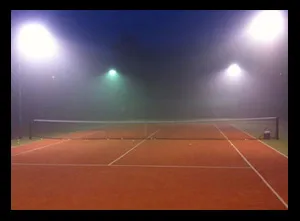
At a club like ours, where most of us play for the love of it rather than a ranking, finding a partner you actually enjoy standing next to is worth more than a new racket. So here is a practical guide to finding one, keeping one, and getting the best out of each other from the first cold morning of the season to the last floodlit evening.
Start with style, not standard
The most common mistake is pairing up with whoever happens to sit nearest your level on the box league table. Handy, but not the whole story. Ask yourself three questions instead.
First, where do you like to hit from? If you are a baseline grinder who enjoys long rallies, a partner who wants to be at the net before the ball has cleared the service line is a gift. Two net-rushers, on the other hand, tend to leave an awful lot of empty green stuff behind them.
Second, how do you return? A player with a steady, loopy return down the middle pairs beautifully with someone who loves to poach. A duo of big flat hitters can be lethal, but only on the days the serves are landing.
Third, who talks? Some players want a running commentary; others go quiet and simply get on with it. Neither is wrong, but mismatched chatter is one of the quickest routes to a thoroughly miserable hour.
The two-minute chat before the first ball
Before you so much as knock up, agree three things. Who takes the forehand in the middle? What happens on a short ball down the middle? And what is the plan when the opposition lobs well?
It takes two minutes and saves a heap of apologising later. Club nights are ideal for this kind of experimenting, because there is nothing riding on the result. Treat those evenings as a trial run rather than a competition and you will learn more about a potential partner in forty minutes than in a month of guessing.
Three words that do most of the work
Good doubles communication is not a speech. It is a series of short, loud, early calls.
Mine. Say it before you move, not as you are playing the shot. It is remarkable how many avoidable collisions start with two players both staying silent and both assuming.
Yours. Same rule. Call your partner off a ball generously and early, especially anything drifting towards the middle on their backhand side.
Switch. When you cross, say so. A quick call tells your partner to cover the open court without having to read your mind.
Add a loud shout whenever a lob goes beyond your partner's shoulder, and a simple leave-it when a ball is heading long. That is genuinely most of the vocabulary you need.
Pick a side and stick with it
The deuce-or-ad question gets more airtime at club level than it deserves. The right answer is the one that suits your games, not the one in a textbook.
If your partner has a solid backhand return and you are happier running around to your forehand, let them have the deuce side and enjoy the space. If you both want the forehand in the middle, work out who takes it from where, then remember the agreement five games later. Whatever you choose, choose it once and keep it for the season. Side-swapping every week is a reliable way to stay average forever.
Handling the wobbles
Every partnership has a set where nothing lands. The temptation is to start offering technical advice mid-match; resist it. Unless your partner asks, save the coaching for the car park or the tea table afterwards.
Instead, agree on a reset. Some pairs use a word, some use a joke, some just walk to the back of the court and take a slightly longer breath than usual. The point is to interrupt the slide before it turns into a mood.
And keep an eye on the scoreline without letting it own you. At 5-0 down, the next game is still just a game. Doubles is the most forgiving format in tennis, and a couple of good returns can turn a whole afternoon.
Where to find your person
Club nights are the obvious starting point, but they are not the only one. Sign up for the box leagues and actually play your matches rather than letting them drift into December. Put your name down for the mixed doubles socials, even if you would usually rather watch. Mention to the coach that you are after a regular partner; coaches spot pairings nobody else notices.
And if you have found someone you enjoy playing with, say so. A simple invitation to a regular Thursday hit is all it takes, and most people are quietly delighted to be asked.
Keeping it fun past the honeymoon
A partnership that lasts has a life beyond the scoreline. Book a court, play two sets, then have a cuppa. Enter a handicap tournament together and laugh at the nonsense. Take a week off in the depths of January when the courts are grim and everyone is tired.
The best doubles pairs at any club are rarely the two strongest players. They are the two who know each other's game well enough to be in the right place without being told, and who still enjoy each other's company when the ball is going out more often than in. That is the partnership worth keeping, and it is usually built one ordinary Tuesday evening at a time.