Small Margins, Big Gains: Five Habits That Lift Your Coylton Club Tennis
Photo: Ohakwe1, CC BY-SA 4.0, via Wikimedia Commons
Most of us do not need a complete technique overhaul. We need to stop giving away cheap points, arrive at the ball a little earlier, and keep our heads clear when the score gets interesting. That is the quiet truth of club tennis. The players who improve are often not the ones with the flashiest shots. They are the ones who build small habits and repeat them until they become normal.
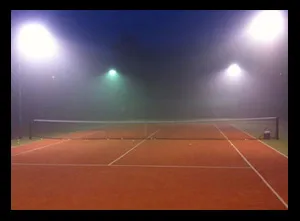
The good news is that you can work on all of this on the Coylton courts without booking a week of intensive coaching. Here are five habits worth building this winter, each with a simple drill you can try in a social session, a club night or a quiet half-hour before the lights go off.
1. The Split Step: Land Lightly, Move Earlier
A split step is a small hop just as your opponent makes contact with the ball. It sounds almost too simple to matter, but it does. When you land on the balls of your feet, you are ready to push off in either direction. When you are flat-footed, you are already a beat behind. Most club players know this in theory and forget it in practice.
The habit to build is not a dramatic leap. It is a light, timely landing. Think of it as a little reset before every shot, not a fitness test.
Coylton drill: the line hop. Stand just behind the service line facing the net. Have a partner or a ball machine feed a ball, or simply shadow the movement. As they swing or feed, make a small split-step hop and land ready. Do ten repetitions, rest, then do another set. No racket needed at first. Once it feels natural, take it into a rally and say the word 'land' to yourself as your opponent hits. Two minutes of this before a social set can wake up your feet.
2. Recovery Footwork: Get Back Before You Admire
We have all done it. You hit a decent forehand, pause to admire it, and then realise your opponent has already returned the ball into the space you left behind. Recovery is not glamorous, but it is one of the fastest ways to improve your club tennis. The aim is simple: after you hit, get back towards a sensible middle position rather than standing still.
You do not need to sprint like a professional. A few purposeful steps can make the next shot much less desperate. The habit is to treat recovery as part of the shot, not an afterthought.
Coylton drill: baseline rebound. Place two cones or water bottles on the baseline, roughly halfway between the centre mark and each singles sideline. Start in the middle. Shadow a forehand, then recover to the middle cone. Shadow a backhand, then recover again. Do six repetitions each side. If you are breathing heavily, that is normal. Then try it with a partner feeding balls, hitting one shot and recovering before the next feed. The goal is not speed for its own sake. It is getting your feet moving back into the court before the next ball arrives.
3. A Steadier Serve Toss: Put It in the Same Window
The serve toss is the quiet engine of the whole shot. If the toss is all over the place, your serve has to rescue it. If the toss is consistent, your body can relax and swing. Many social players spend hours on the serve motion but never practise the toss on its own.
The habit is to find one toss window and trust it. Slightly in front of you, at a height you can reach without stretching. Not too low, not a moon shot. Just repeatable.
Coylton drill: toss and catch. Take twenty balls to the baseline. Hold your racket out in front of you at about waist height, then toss the ball so it would land near the racket head. Catch it without hitting. Do ten tosses, then ten more. Your only goal is repetition. Once that feels steady, hit serves at about seventy per cent effort, focusing on the same toss rather than power. If the toss goes wandering, go back to catching. It is a small drill with a big payoff.
4. Smarter Doubles Communication: Say More, Guess Less
Doubles can get messy when nobody speaks. Two players both go for the same ball, both leave the middle, or both assume the other one is taking the lob. Good communication is not about long tactical speeches. It is about short, clear words before and during the point.
The habit is to use simple calls: 'mine', 'yours', 'switch', 'leave'. Before each point, agree on one small thing. Who takes the middle ball? Are you poaching on the return? Who covers the lob? That is enough.
Coylton drill: two-word rally. In a practice rally, every ball must come with a call. If you are going for it, say 'mine'. If you are leaving it, say 'yours'. It will feel loud and slightly silly at first, which is a good sign. Then play ten points of doubles where you and your partner agree on a plan before each point. Keep the plan short: 'I will poach on the second return' or 'you take the middle'. The aim is to make talking normal, so that in a club match nobody is relying on telepathy.
5. Between-Point Routines: Reset Instead of Rushing
When a point ends, most of us do one of two things. We either rush straight into the next point, still annoyed about the last one, or we drift away and lose track of the score. A between-point routine gives you a small pause to reset. It does not need to be complicated.
Turn away from the net. Take a breath. Adjust your strings or bounce the ball. Decide what you want to do on the next point. Then step up and play. The habit is the pause, not the superstition.
Coylton drill: three-breath reset. Play a practice tie-break with a friend. Between every point, turn away, take three slow breaths, and then turn back with one simple plan. It might be 'deep return' or 'first serve in'. Do not analyse the last point for too long. Just reset and go. In a club social, this can be the difference between a calm finish and a frantic one. It also makes you much nicer to play with, which is never a bad thing.
Bringing It Together
You do not need to work on all five habits at once. Pick one for the next two weeks. Maybe it is the split step. Maybe it is the toss. Maybe it is simply saying 'mine' and 'yours' in doubles. Small habits are not magic, but they are reliable. They show up in the third set, in the winter wind, and in the close club match where nobody is playing their best tennis.
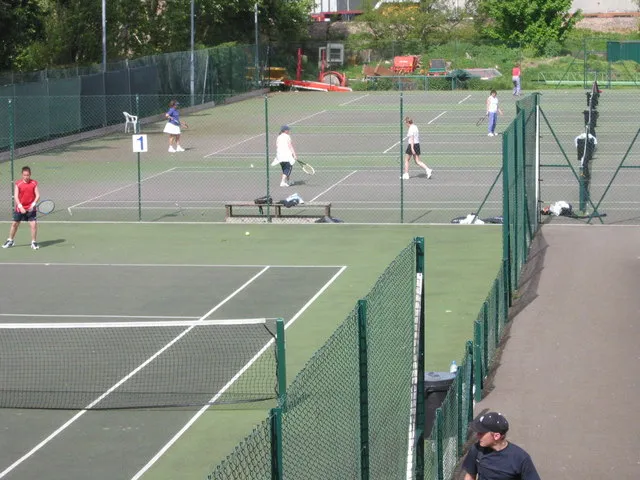
The Coylton courts are a good place to test them. There is no queue of scouts watching, no need to impress anyone, and usually someone happy to feed a few balls or rally with you. Keep it simple, keep it friendly, and let the small margins do the rest.