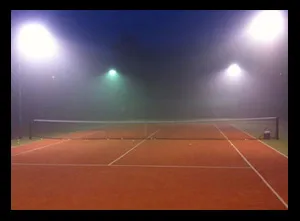
The Warm Welcome Is the Real Home Advantage at Coylton Tennis
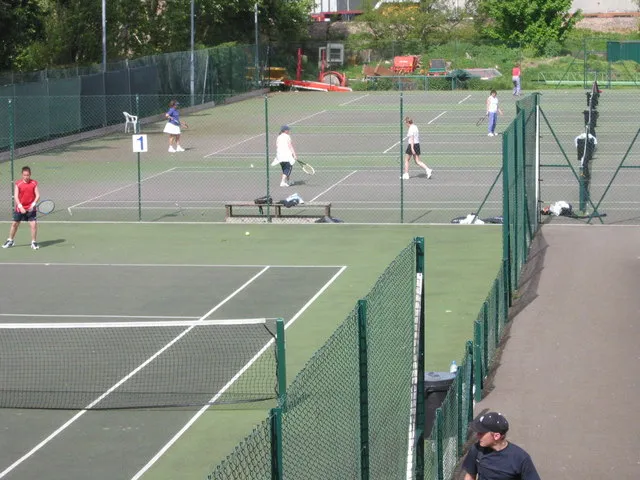
Photo: Andrew Brooke, CC BY-SA 2.0, via Wikimedia Commons
We can spend a lot of time talking about courts. We talk about the surface, the nets, the floodlights, the booking system, the size of the car park. All of that matters, obviously. A club with dodgy courts and no lights is not going to thrive. But ask most people why they keep turning up to a local tennis club on a cold Tuesday in November, and the answer is rarely a technical one.
It is usually a person. The one who said hello on the first night. The one who explained where the balls live. The one who invited them into a doubles set when they were clearly expecting to stand awkwardly by the gate for twenty minutes.
That is the real home advantage, and at Coylton Tennis it is worth protecting.
A court is a facility; a club is a feeling
Anyone can build a court. Well, not anyone, but you get the point. Courts are infrastructure. A club is something else: it is the accumulated small habits of the people who use it. The greeting at the gate. The willingness to mix in. The volunteer who turns up early to put the nets up and stays late to lock the gate. The WhatsApp group that actually answers questions rather than just posting weather updates.
When people say a club feels friendly, they are not usually describing a formal welcome pack. They are describing a hundred tiny moments that add up to a culture. That culture is not automatic. It is made, week by week, by members who decide to be the sort of club they want to belong to.
What newcomers actually remember
New players are not really assessing the quality of the baseline. They are working out whether they belong. They notice whether someone looks up when they walk in. They notice whether the group on court is the sort that says 'we are just finishing' or 'do you want to join for the last ten minutes?' They notice whether the chat afterwards is welcoming or cliquey.
That is not about being relentlessly upbeat or pretending every player is equally experienced. It is about basic hospitality. A new person does not need to be the centre of attention. They just need to be seen.
The practical stuff follows from that. If a newcomer does not know the booking system, show them. If they have not played for years, reassure them that half the club is in the same boat. If they are worried about being too slow or too rusty, tell them about the mixed-ability sessions where the whole point is a decent rally and a bit of a laugh. Small acts of inclusion are how a casual visitor becomes a regular.
The mixed-ability magic
One of the quiet strengths of a club like Coylton is the mixed-ability session. On paper, it sounds like a compromise. In practice, it is often the heart of the place. Stronger players learn to play with patience and control. Newer players get to experience proper rallies without feeling like they are holding up a league match. Everyone gets better at the social side of tennis, which is honestly half the point.
Mixed sessions also break down the invisible hierarchy that can creep into any club. If the same four players always take the best court and the same group always hovers at the edge, the club starts to split. If everyone mixes in now and then, the place stays porous. People feel able to ask for a game. That is a much healthier dynamic than waiting to be invited.
Big venues, big screens, small talk
Bigger tennis venues have their advantages: more courts, more coaching, more competitive opportunities. But they can also feel impersonal. You can play at a large centre for months and still not know anyone's name. That is not a criticism of the staff; it is just the nature of scale. A local club has the opposite challenge. It is small enough that people notice when you are missing, which is lovely, but also small enough that cliques can form if nobody pays attention.
Coylton's advantage is not that it is bigger or shinier. It is that it is the kind of place where the person on the next court is likely to be someone you have played with before. That familiarity is worth more than a fancy clubhouse. It is also more fragile. You have to keep choosing it.
Keeping the welcome alive
So what does that look like in practice? Nothing dramatic. A rota of volunteers for social sessions helps, but so does a simple rule that regulars keep an eye out for anyone standing alone. A named contact for new members is useful. So is a short, honest description of what a session is actually like, rather than a vague promise that 'all levels are welcome' with no explanation of what that means.
It also helps to celebrate the ordinary stuff. The volunteer who brings the oranges. The person who organises the winter league. The member who fixes the net and does not make a fuss. Clubs often thank people for winning things, but the culture is held together by people who do the unglamorous, repetitive, quietly generous things.
And we can all do the small stuff. Say hello to the person warming up on their own. Introduce yourself to the new face. Ask someone who has been away for a while how they are getting on. Offer to share a court when the lights are fully booked. These are not grand gestures. They are the everyday glue.
The small stuff is the whole thing
Tennis clubs sometimes talk as if the courts are the main character and the people are supporting cast. It is the other way round. The courts are the stage. The people are the club. A warm welcome is not a soft extra bolted onto the serious business of fixtures and coaching. It is the reason the fixtures and coaching have anyone to happen to.
Coylton Tennis will not win every match. It will not always have perfect weather or a perfectly dry court. But it can be the sort of club where people feel glad they came. That is a competitive advantage worth more than any scoreline, and it is one we can choose to renew every week.