Short Cues, Big Confidence: The Courtside Nudge That Helps at Coylton
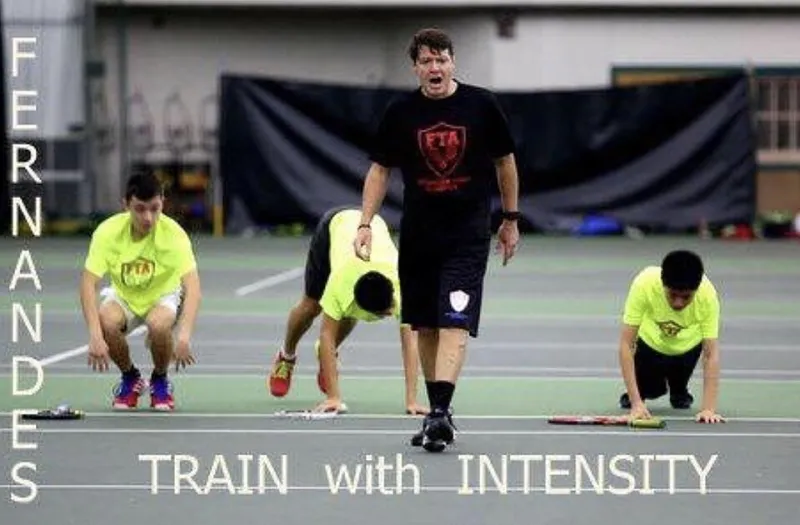
Photo: Ferngus, CC BY-SA 4.0, via Wikimedia Commons
There is a moment at nearly every Coylton social when a newer player turns to you between points and says, 'Any tips?' The kettle is on in the clubhouse, the next four are waiting, and you have about ten seconds to be useful. The temptation is to unpack everything you know: grip, stance, swing path, split step, the lot. The kinder and more effective move is usually much smaller. Pick one thing. Say it in three words. Then let them play.
Ask First, Then Pick One Thing
Before offering anything, ask a simple question: 'What feels awkward?' A beginner might say they keep missing the ball, or their serve keeps going long, or they cannot tell where to stand in doubles. Their answer tells you what matters to them. Your job is not to diagnose every flaw. It is to give them one clear thought they can use on the next point.
At Coylton, we are lucky to have a club full of people who have played for years and a steady stream of newcomers finding their feet. That mix is brilliant, but it can also mean a new player gets five different pieces of advice before the first changeover. One voice, one idea, one nudge is far more helpful.
The Three-Word Rule
Short cues work because tennis happens quickly. A player cannot hold a paragraph in their head while the ball is coming. Three words are easy to remember, easy to repeat, and easy to drop if they do not help. Think of it as a reminder, not a lesson.
Say it once, cheerfully, and then leave it alone. If they try it and it works, great. If they try it and it does not, they will probably tell you. Either way, the rally keeps going and the social keeps its friendly rhythm.
Cues for Common Doubles Moments
Doubles at Coylton socials can be a whirl of moving parts, especially for someone still learning where to stand. Keep the cue simple and tied to the moment.
- At the net and looking flat-footed: 'Racket up ready.'
- Returning serve and unsure where to aim: 'Crosscourt and deep.'
- A ball dropping between two players: 'Call it early.'
- Moving across to poach: 'Go, then recover.'
- Facing a lob over your head: 'Turn and chase.'
- Serving and tossing too low: 'Toss up high.'
- Volleying with a big swing: 'Short punch forward.'
- After a loose point: 'Next point, reset.'
None of these are technical lectures. They are little signposts. The player still has to play the shot, but the signpost gives them somewhere to look.
Keep Singles Simple Too
Singles advice can be even shorter because there is nowhere to hide. A new player often needs permission to play within themselves rather than trying to hit winners. Useful three-word prompts include 'Depth over pace', 'Watch the bounce', 'Move then hit', and 'Recover to middle'. For someone struggling to get the ball over the net, 'High over net' is often all they need.
If they are mid-match and looking frazzled, the best cue might be 'Breathe and bounce'. It is not glamorous, but it gives them a routine and a moment to settle.
What Not to Say
Just as important as the cue is what you leave out. Avoid the technical unload. 'You are dropping your racket head and opening the face too early' may be accurate, but it is not helpful in the middle of a social set. Avoid 'Just hit it harder' unless you want the ball in the hedge. Avoid comparisons with other players, even kindly meant ones. 'My partner always steps in' can sound like a criticism, even when it is not meant that way.
Also avoid correcting grip or swing shape during a match. Those are practice-ground conversations, and even then they are best handled by a coach. If a player asks a direct technical question, it is fine to say, 'That is one for a coaching session, but for now try this one thought.'
Timing and Tone Matter
The best cue arrives between points, not as the ball is being tossed. Wait until the rally ends, make eye contact, and keep it light. Use 'try' rather than 'you must'. A smile helps. So does specificity. 'Good second serve, that landed deep' is more useful than a vague 'well done'.
If someone does not want advice, that is absolutely fine. Some players come to Coylton to hit balls and forget the week, not to be coached. Ask first, and respect the answer.
Know When to Hand Over
Peer nudges are brilliant for small, immediate reminders. They are not a substitute for proper coaching. If a player has the same issue week after week, or if they are keen to improve quickly, point them towards a club coaching session or a one-to-one with a qualified coach. That is not passing the buck. It is giving them the right kind of help.
The Clubhouse Test
Before you offer advice at Coylton, imagine saying it over a cup of tea in the clubhouse. Would it sound kind? Would it sound simple? Would it leave the other person feeling more confident rather than more confused? If the answer is yes, you are probably on the right track.
The three-word coach is not a title anyone needs. It is just a habit: one idea, offered at the right moment, with a bit of warmth. At a club like ours, that is often worth more than a full technical breakdown. And it keeps the social moving, which is the whole point.